
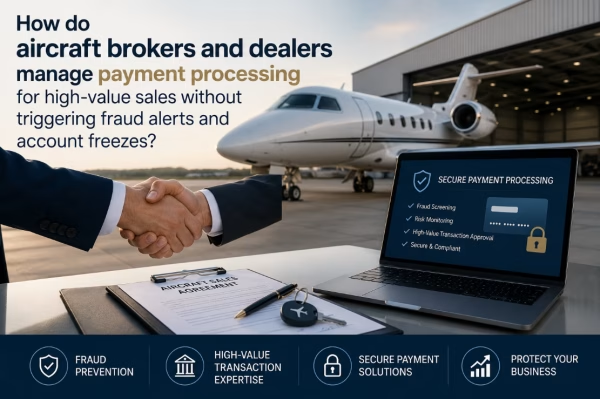
Aircraft brokers that deal in aircraft sales, fractional ownership stakes, and multi-million dollar transactions always face unique payment processing challenges that standard merchant accounts can not handle. A single aircraft sale can represent anything between $5 million and $50 million in transaction value, which certainly triggers immediate fraud scoring and manual review.
Most payment solution providers have absolute transaction limits per merchant per month, and aircraft brokers routinely exceed those thresholds on their first deal itself. The combination of high-volume, irregular transaction patterns, and the complexity of aviation financing certainly is a perfect reason for account freezes and sudden termination.
The issue basically stems from how payment system providers assess risk. They basically rely on velocity metrics, average transaction value, and historical patterns to flag anomalies. For aircraft brokers, their first major sale, which is a genuine, legitimate $8 million transaction, can certainly look like a transaction that is identical to bust-out fraud or money laundering from a statistical perspective.
Without prior processing history or specialized underwriting, aircraft brokers face extreme manual reviews and delays, which can affect deal timelines. Or sometimes, your payment solution provider will decline the transaction and request you to use a wire transfer instead.
Such situations push aircraft brokers back to slower, less transparent payment methods, and it also erodes the operational efficiency that modern payment infrastructure should definitely have. The correct approach is to work with a specialized aviation payment solution company or a high-net-worth merchant account provider that fully understands deal-based revenue models.
These payment solution providers build transaction monitoring and fraud detection systems around the unique patterns of aviation transactions, and they do not force aircraft brokers into the regular e-commerce model.
Such payment solution providers will require detailed transaction documentation, which may include purchase agreements, proof of funds, and due diligence of counterparties. But all this actually becomes your protection against regulatory scrutiny and chargebacks.
When you structure your merchant account application with absolutely clear disclosures of expected transaction size and patterns, then it will prevent surprises of application rejection or account closure. A good payment orchestration platform becomes extremely critical for aircraft brokers because it helps in managing multiple deal types.
Some transactions may settle via ACH, some may settle through international wire, and some may go via invoice-based installment options. Rather than fighting with a single payment processor’s limitation, aircraft brokers should use specialized payment orchestration systems that allow them to route transactions on the most appropriate rails. It also helps in efficiently auditing the trail that demonstrates legitimate business operations.
All of this is essential when you are processing transactions that are naturally high-value and can sometimes look suspicious and risky to automated risk monitoring systems.
The aviation finance vertical definitely demands full transparency with acquiring partners, and that is why you should be upfront about your business model when you make an application.
Aircraft brokers that attempt to hide their transaction size or deliberately structure the deal so that the transactions stay below the monitored thresholds often incur enhanced scrutiny and, in most cases, will have their accounts terminated.
Rather than trying these difficult options, aircraft brokers must position their application with complete honesty about their deal flow; they should also be clear about their expected transaction value and must present the rationale behind the revenue model.
High-risk payment service providers are the perfect options that can be considered for this industry because they certainly understand how to efficiently manage large, infrequent transactions, which are absolutely normal in the aircraft sales industry.