
What is a Gaming Merchant Account?
A gaming merchant account is a specialized bank account designed exclusively for businesses operating in the iGaming industry. High-risk acquiring institutions and sponsor banks offer these accounts. By using these accounts, gaming merchants can accept almost all types of credit and debit cards as well as various alternative payment methods such as crypto and ACH. These accounts also come with built-in options for payouts and online credit transfers.
Why Gaming Merchants Need a Specialized Account
A gaming merchant account is different than a regular ecommerce merchant account. A payment processor and sponsor banks generally consider gaming to be a high-risk category because of the high chargeback exposure, regulatory variation, digital-delivery disputes, cross-border transactions, and the requirement for a more detailed underwriting review.
That high-risk label doesn’t mean a gaming company can’t get approved. It simply means the business needs better documentation, more website compliance, better fraud controls, and someone who has direct experience in gaming payments and not just a generic provider that only supports low-risk ecommerce.
In practical terms, the right account setup can affect more than acceptance rates. It can influence settlement speed, reserve terms, payment method access, the ability to scale internationally, and the long-term stability of the business’s processing relationship.
“A standard processor may approve a gaming merchant quickly, then shut the account down after a few disputes or a compliance review. A specialized high-risk setup is designed to prevent that kind of disruption.”
That scenario is common in gaming. A merchant may focus only on getting approved. At the same time, the real business risk appears later through rolling reserves, sudden account holds, restricted countries, or payment method limitations.
| Licence Jurisdiction | Typical Gaming Activities Covered |
|---|---|
| United Kingdom Gambling Commission (UKGC) | Online casinos, sportsbooks, bingo, poker, gaming platforms |
| Malta Gaming Authority (MGA) | Online gaming, betting, esports, gaming operators |
| Isle of Man Gambling Supervision Commission | Gaming operators, betting businesses, gaming software providers |
| Gibraltar Regulatory Authority | Gaming and betting businesses serving international markets |
| Kahnawake Gaming Commission | Online gaming and wagering businesses |
| Alderney Gambling Control Commission (AGCC) | Remote gaming operators and software providers |
| Curaçao Gaming Licence | International gaming businesses and gaming platforms |
| Anjouan Gaming Licence | Online gaming operators and betting platforms |
| State-Regulated US Gaming Licences | Fantasy sports, gaming, regulated wagering businesses |
| Provincial Canadian Gaming Licences | Licensed gaming and betting operators |
| Australian State & Territory Licences | Gaming, wagering, betting operators |
| European Union National Gaming Licences | Licensed gaming operators in regulated EU jurisdictions |
The licences listed above represent some of the most common gaming licences supported by our acquiring partners. If your business operates under another recognised gaming, betting, fantasy sports, esports, sweepstakes, skill gaming, or gambling licence not listed here, we still encourage you to apply.
QuadraPay works with a broad network of acquiring partners across multiple jurisdictions and will make every reasonable effort to identify a suitable payment processing solution based on your licence, business model, operating markets, and compliance profile.
Acceptance depends on underwriting review, jurisdiction, business model, processing history, website compliance, and the requirements of our acquiring partners. Additional licences and regulated gaming jurisdictions may also be supported on a case-by-case basis.
| Country | Supported Currencies |
|---|---|
| United States | USD |
| Canada | CAD, USD |
| United Kingdom | GBP |
| Germany | EUR |
| Australia | AUD |
QuadraPay supports legal gaming businesses in select regions with compliant high-risk merchant account solutions. Below is the breakdown of our support and capabilities by country.
Gaming Merchant Accounts In United States.
We assist United States-based licensed gaming businesses with ACH and Credit Card processing solutions. State-specific laws do apply, and our payment processing partners require full compliance.
Gaming Merchant Accounts In The United Kingdom
For UK-based gaming platforms, it is mandatory to be regulated by the relevant commissions. Skill-based gaming operators must have a legal opinion. Our solutions allow gaming businesses in the UK to accept GBP and Euro payments with strong 3DS2 support and fraud protection layers.
Gaming Merchant Accounts In EU/EEA.
We work with registered gaming businesses across the European Union and the European Economic Area. Our partner processors ensure PSD2 compliance for safe and smooth cross-border credit card payments.
Who Needs a Gaming Merchant Account?
| Gaming Business Type | Common Payment Processing Requirements |
|---|---|
| Fantasy Sports Platforms | Entry fees, recurring billing, player payouts |
| Skill-Based Gaming Platforms | Tournament fees, fraud prevention, prize distributions |
| eSports Platforms & Tournaments | Registration fees, ticket sales, international payments |
| Mobile Gaming & In-App Purchases | Subscriptions, microtransactions, virtual goods payments |
| Online Gaming Marketplaces | Buyer-seller payments, multi-currency processing |
| Social Gaming Platforms | Virtual currency purchases, premium memberships |
| PC & Console Game Publishers | Digital downloads, subscriptions, DLC purchases |
| Cloud Gaming Platforms | Recurring subscriptions, global payment acceptance |
| VR & AR Gaming Businesses | Membership fees, virtual item purchases |
| Gaming Subscription Services | Automated recurring billing, account management |
| Gaming Communities & Membership Sites | Membership payments, recurring revenue collection |
| Gaming Coaching Platforms | Session bookings, instructor payouts |
| Game Server Hosting Companies | Monthly subscriptions, automated billing |
| Gaming Merchandise Stores | Ecommerce payment processing, card acceptance |
| Digital Game Key Sellers | Digital product payments, fraud screening |
| Gaming Tournament Organizers | Event registrations, prize payouts |
| Gaming Content Creator Platforms | Subscription payments, creator payouts |
| Blockchain Gaming Businesses | Alternative payment methods, global payment acceptance |
| Gaming Software Developers | Software licensing, subscriptions, digital sales |
The gaming industry is rapidly evolving. In the past, gaming primarily consisted of 8-bit titles such as Contra, Mario, Street Fighter, and Tetris. However, today, the gaming industry has undergone a significant transformation. It is no longer restricted to electronic consoles but is available over the World Wide Web. The types of games and the types of gaming service providers have also changed. Below is a detailed overview of the type of gaming businesses that need a merchant account for processing credit card transactions.
Merchant Accounts For eSports platforms
The esports industry is currently valued at billions of dollars. Competitive online gaming tournaments allow users to wager on their favorite teams or players. Such eSports platforms require high-risk merchant accounts for ticket sales for eSports events.
Merchant Accounts For Fantasy Sports Websites
These websites allow users to create virtual teams and then compete for cash prizes. These competitions are based on real-world sports events. They have a pay-to-play model, and for that, they require merchant accounts. Fantasy sports websites use gaming merchant accounts to accept payment for entry fees for leagues and competitions. They also use payout solutions to distribute the winning amount to players. Fantasy sports websites use various payment instruments, including credit cards, debit cards, and cryptocurrencies.
Skill-Based Competition Gaming Websites
In these games, users win on the basis of skill and not by chance or luck. Players compete together, and the platform chooses the winner based on performance. Examples of such skill games include strategy-based board games, competitive gaming challenges, etc. Skill gaming websites need merchant accounts to accept payments for entry fees and participation charges. They also need to pay out solutions to transfer prize money to winners. Some skill gaming websites also use a subscription model for premium users, and for that, they need a recurring payment solution.
Gaming marketplaces (buying and selling in-game items)
These marketplaces allow users to buy and sell in-game items, including virtual currencies. Such gaming marketplaces are becoming extremely popular these days. Usually, such marketplaces use alternative payment processing solutions such as cryptocurrencies and e-wallets to accept payments.
Gaming companies, irrespective of whether they are offering a game of chance or a game of skill, are all considered high risk and are subject to various regulatory challenges. Businesses operating in the above-listed industries require specialized high-risk gaming merchant accounts. By finding the right partner, these gaming companies can expand globally and enhance their financial stability by creating a name in the global gaming industry.
Why Gaming Merchant Accounts Are High Risk
The gaming industry has enormous growth potential. Despite its potential, the industry is deemed high-risk by sponsor banks and payment service providers. When an industry is categorized as high risk, then it becomes extremely difficult for businesses from that sector to get merchant accounts and other financial services. There are many reasons behind this unfavorable categorization. Let’s explore a few.
High Chargeback Rates
It is a well-known fact that the gaming industry attracts more than average chargebacks and returns. Players dispute transactions for various reasons; sometimes, they claim the transactions are unauthorized, or they dispute them due to dissatisfaction with the game outcome. Chargebacks can lead to significant financial losses for acquiring banks and payment processors, and that is why such merchants are classified as high risk.
Regulatory Uncertainty
Gaming laws vary from country to country and sometimes even within states; this creates a constantly shifting regulatory landscape. Banks are required to comply with regulations related to gaming. This complexity makes onboarding such merchants risky for payment processors.
Fraud Risk
Another challenge that haunts this industry is the risk of fraudulent transactions. Sponsor banks prefer to stay away from such industries, as it may create regulatory challenges for the merchant processor.
High Transaction Volumes & Cross-Border Payments
Online gaming merchants process a high number of transactions on a daily basis. These transactions range from small in-game purchases to large deposits and withdrawals. The high ticket frequency associated with gaming merchants increases the risk of fraud and chargeback.
Cross-border transactions add another layer of complexity
Gaming businesses generally operate internationally, and they accept payments in multiple countries in multiple currencies. Cross-border transactions make onboarding such merchants a complex task, as it involves managing fluctuating exchange rates, regional banking regulations, and compliance challenges. With international transactions, chargebacks are harder to dispute and recover, and this may lead to financial loss for payment processors and sponsor banks.
Reputation Risk
Numerous gaming platforms, primarily those that engage in activities like fantasy sports, frequently bear connections to games of chance. This close association of gaming merchants with the game of chance industry leads to regulatory scrutiny and concerns about responsible gaming practices.
Many gaming platforms have faced complaints in the past about unfair practices, including rigged gaming or failure to pay the winning amount. All these issues create a trust deficit and make financial institutions hesitant to process transactions. Apart from these reputational risk concerns, another challenge is ensuring that minors do not get access to gaming platforms. Age verification failure can result in significant reputational damage for the payment service provider.
Use of Cryptocurrencies
Crypto provides anonymity, and that is why they are an attractive instrument for fraudsters. Banks prefer to stay away from industries that have heavy usage or involvement of Cryptocurrencies. The legal status of cryptocurrency varies across jurisdictions; some countries allow it, some have strict regulations, and some have banned it altogether.
This uncertainty discourages payment processors from working with merchants heavily dependent on crypto transactions. Crypto also has volatility risks. A significant drop in the value of cryptocurrencies can make a severe impact on the financial stability of the merchant and the supporting payment processor.
Because of all the above-listed factors, payment processors generally consider gaming as a high-risk industry. This does not mean that gaming merchants cannot get credit card processing solutions; they can, but for that, they would need to approach a lender.
Gaming Merchant Account Features
We have established strong connections with a few of the best high-risk gaming merchant account providers. Our processing partners and associated sponsor banks have a passion for collaborating with growth-oriented gaming merchants that are lagging because of the non-availability of merchant accounts. Our partners have massive experience supporting the requirements of merchants in various gaming subsectors. These solutions come with top-rated features. Let’s explore a few of these.
A specialized merchant account is essential for gaming and esports businesses because of the high-risk nature of the industry. Gaming merchant accounts should have some important features. These help gaming merchants expand their business without worrying about the complexities of merchant processing. The following features are a must-have for any gaming merchant account.
Multiple Payment Methods
The merchant account must offer various payment methods. Gaming businesses cater to a global audience, and relying solely on credit card processing will not help. The merchant account should accept all types of credit and debit cards for one-time and recurring payments. The payment gateway should support the tokenization feature, which allows users to securely store credit card details on the gateway for future transactions.
It should also support payment acceptance through various e-wallets. Some of the most popular e-wallets used by gaming enthusiasts include Apple Pay & Google Pay. E-wallets reduce the risk of chargebacks as they require user authentication.
Support for cryptocurrencies, such as Bitcoin, is crucial. USDT and Ethereum are also important. In addition to these, it’s crucial to incorporate bank transfers and ACH payments. Gaming merchants should have SEPA & SWIFT transfer capabilities for international transactions. For users in the US, ACH (Automated Clearing House) payments are a must.
If the gaming company operates at a physical location or is hosting an event, then it would need face-to-face transaction capabilities. For this, they will need a credit card terminal for gaming, which allows users to make payments through QR codes and cards. Beyond this, additional payment instruments, such as carrier billing, can also be beneficial.
| Region | Popular Payment Methods |
|---|---|
| United States | ACH, eCheck, Visa, Mastercard, Apple Pay, Venmo |
| Canada | Interac, e-Transfer, Visa, Mastercard, PayPal, Google Pay |
| United Kingdom | Faster Payments, Visa, Mastercard, Apple Pay, Open Banking |
| European Union | SEPA, Sofort, iDEAL, Visa, Mastercard, Giropay, Klarna |
| Australia | POLi, BPAY, Visa, Mastercard, Afterpay, Zip |
| Singapore | PayNow, FAST, Visa, Mastercard, GrabPay, ShopeePay |
| Israel | PayBox, Visa, Mastercard, Isracard, Bit |
Chargebacks and Fraud Prevention Tools
It is a well-known fact that merchants in the gaming industry face slightly higher than average chargebacks. This is because of disputed transactions, fraudulent activities, and unauthorized purchases. A reputable merchant account provider must offer specialized tools to the merchant that help reduce fraudulent transactions.
Many payment service providers have started using artificial intelligence (AI) tools to evaluate gaming transactions in real time to detect any suspicious activity. The tool immediately halts the transaction before it completes. Such tools check for unusual transaction patterns and intelligently flag fraud transactions from stolen credit cards. Machine learning technology performs this detection.
3D Secure, or 3DS, adds an extra layer of security as it requires the user to enter a one-time password that is sent to the phone or the email address before the transaction is completed. Merchants using 3D secure authentication can effectively prevent unauthorized card usage. This feature also helps reduce chargebacks caused by fraud and enhances security for international card transactions.
Another tool that gaming merchant accounts must have is Address Verification Systems (AVS). When a customer submits the billing information, the gateway matches the address with the one on the credit card account. This method helps identify suspicious transactions and can significantly reduce the risk of fraudulent purchases.
The payment service provider must allow the merchant to use chargeback alert services. These third-party services help merchants reduce the risk of account suspension and excessive chargebacks. With CB alerts, merchants can minimize the risk of account suspension and excessive chargebacks. The merchant receives an alert when the customer contacts the card issuer to raise a dispute. This way, the merchant gets extra time to resolve the dispute with the customer before it becomes a chargeback.
Multi-Currency Processing
The payment gateway should ensure that the merchant is able to accept payments in various currencies, as gaming is a global industry. Players from different countries prefer to make payments in their home currencies. Gaming merchant accounts have a dynamic currency conversion feature. DCC displays game prices in the user’s local currency.
Our processing partners allow gaming merchants to accept payments in over 100 currencies. The conversion happens based on real-time exchange rate adjustments, which prevents financial losses due to currency fluctuations. With the multi-currency payment processing account, gaming merchants can enhance user trust and also reduce the cart abandonment rate.
Fast Payouts & Settlement Cycles
Gaming businesses depend on fast cash flow as they have to pay winners and also spend on marketing campaigns. A payment service provider that does not make fast payouts to the merchant is not a good choice. You should look for a payment processor that offers you same-day or next-day payout. If that is not possible, they should offer you flexible settlement schedules such as weekly or biweekly, depending on your choice.
Many payment service providers force merchants to accept payouts in expensive payment methods. We suggest you choose a provider that allows you to select the payment method of your choice, such as bank transfer, crypto, or prepaid cards. Delayed payout from the processor can significantly impact your business’s growth, potentially leading to player dissatisfaction and financial bottlenecks.
Recurring billing and subscription management
Gaming businesses must have subscription payment acceptance capability as users make monthly payments. A smooth recurring payment processing solution is mandatory for gaming businesses. By using recurring billing solutions, gaming merchants can collect payments on time without the involvement of manual efforts. The user receives a notification in advance about the upcoming subscription renewal.
Secure API and payment gateway integration
Another important feature of a good gaming payment gateway is a secure and easy-to-integrate API. The payment service provider should offer a developer-friendly API. This way, merchants can write custom code and manage payment flows. Most payment service providers offer ready-to-use plugins for popular content management systems used in the gaming industry, such as WordPress, Magento, and Shopify.
For simple integration, the payment processor must offer a hosted payment page. A cashier’s SaaS (software as a service) integration can not be ignored. It acts as a centralized, all-in-one payment processing hub. The Cashier SaaS optimizes transactions, enhances security, and ensures compliance. It also helps merchants define the payout rules. Our gaming payment gateway is compatible with popular Cashier SaaS tools.
Compliance with Gaming Regulations
Keep in mind that the gaming industry is highly regulated. These regulations vary based on the region of operations and sales. The merchant account provider should have experience working with gaming merchants in different jurisdictions. This way, your payment service provider will be able to assist you in ensuring that the strict regulations are in place. The merchant service provider must ensure that KYC and AML compliance are met. Apart from this, age verification tools should also be implemented on the merchant’s website and mobile app.
The payment processor should adhere to the latest PCI DSS standard. To ensure that transactions do not take place in banned regions, the payment gateway should use geo-blocking features. Keep in mind that gaming businesses must comply with local and international financial laws. It is better to work with a payment processor that has excellent experience with the complex rules for processing gaming payments, even if it costs a little bit more.
Merchant-friendly interface
The user interface is responsive and future-ready for both mobile and cloud gaming. It uses adaptive technologies to improve customer experience and engagement. Merchants can easily keep track of sales via the merchant dashboard. Various report options are also available. Most of our partners offer a multilingual dashboard. This reduces the language barrier.
Customisable Checkout
It is effortless to integrate our payment gateway solution onto your gaming website or mobile app. You will get a detailed API integration document that will allow you to write custom code and use all functionalities of the payment gateway. For websites that use content management systems like WordPress and Magento, we also offer ready-made plugins. Merchants that don’t have an e-commerce platform on the gaming website can use the hosted payment page.
Multi-MID Solution
We always suggest our gaming merchants keep a backup processor. This is due to the highly regulated nature of the gaming industry, which makes relying solely on one processor unfavorable. Having multiple providers offers merchants peace of mind. Our gaming payment gateway solutions allow merchants to add MIDs from various gaming merchant service providers to one payment gateway.
Gaming Payout OCT (online credit transfer)
This solution offers a powerful medium for sending payouts to users. Now, merchants can settle directly to users’ credit cards. Card-based online credit transfer can help merchants expand reach in over 100 nations. OCT is one of the fastest ways for payout in the gaming sector.
Multi-Currency Support
Merchants can focus on their core skills, and our Gaming PSP solutions can take care of the rest. The dynamic currency conversion (DCC) feature converts the pricing into the user’s local currency. It increases the trust factor. Merchants can accept payments in over 100 currencies. Our gaming merchant service provider can settle in over 15 currencies.
Compliant Payment Gateway
The speed of transactions in the gaming sector is enormous. Merchants should use gaming payment gateways that are compliant with the latest industry standards and offer super-fast transaction processing.
High Uptime
The data center of the payment processor plays a critical role in the availability of resources and connectivity during transactions. Our solutions utilize Tier 1 data centers to maintain the payment system’s high availability. This feature separates our solution from many generic providers of gaming merchant services.
Higher Transaction Limits
The gaming industry has already surpassed USD 500 billion. This scenario creates massive growth opportunities for gaming merchants. However, many providers offer a small monthly transaction limit to merchants. Such an approach is demotivating, and we think it’s restrictive. That is why our acquirers offer a higher monthly transaction volume limit to qualifying gaming merchants.
Real-World Scenarios That Explain Merchant Risk
Scenario 1: The fast-growing social gaming app
A social gaming app scales quickly through paid ads and influencer campaigns. Revenue rises, but the checkout flow is weak, the billing descriptor is unfamiliar, and customer support is slow. Players begin filing disputes because they do not recognize the charge or cannot get a prompt refund.
Within weeks, the processor flags the merchant for rising chargebacks. The account is not suspended immediately, but the provider increases reserve pressure and requests more documentation. Growth continues, but cash flow tightens because the payment setup was not built for dispute control from the beginning.
“The merchant thought the issue was volume. The real issue was that payment growth outpaced compliance and support controls.
Scenario 2: The licensed operator entering new markets
A licensed operator wants to expand into multiple regions and assumes the existing processor can switch on more countries. Instead, the acquirer reviews each market for licensing fit, local payment method support, fraud exposure, and settlement constraints before approving expansion.
The merchant eventually grows, but only after adding better geo-controls, local payment methods, and clearer market-specific compliance pages. In this scenario, the merchant account becomes part of an international expansion strategy rather than a backend utility.
“International expansion in gaming is never just a translation problem. It is a payments, risk, and compliance problem at the same time.”
Scenario 3: The startup with no processing history
A startup in skill gaming applies for a merchant account with no previous statements, a thin website, and unclear explanations of how winners are determined. The processor does not necessarily reject the category, but underwriting asks for more documents, legal positioning, and ownership details, and website updates before moving forward. After the startup improves its documentation and clarifies the skill-based model, the application becomes far stronger.
The lesson is simple: a merchant with limited history can still improve approval odds by reducing uncertainty for the underwriter.
How to Choose the Best Gaming Merchant Account Provider
An online gaming business should prioritize finding the right credit card processor. This is an important step because the quality of service that your gaming merchant account provider offers can have a direct impact on your business’s revenue as well as overall customer satisfaction. You should consider the following factors when searching for a provider. These will help you identify the best ones for your business.
Industry experience and reputation: Merchants should avoid working with providers that have no experience in processing payments for gaming clients. This is due to the high-risk nature of the industry and the inability of low-risk providers to manage the daily challenges associated with gaming accounts. Choosing the wrong provider can result in challenges like payment hold, account shutdown, and possibly a listing on the match records.
Look for payment service providers that have a proven track record in handling transactions for gaming companies. One way to do it is by looking at the provider’s reviews and testimonials. You may find reviews posted by similar gaming companies. Experienced payment processors are more familiar with gaming regulations and compliance requirements in comparison to a low-risk provider.
Fees and transaction costs: The next thing that you need to look at is the pricing. Transaction fees for gaming businesses are slightly higher than for other industries, but they shouldn’t eat into profits. Such a situation can be extremely costly for high-volume gaming businesses. Work with the provider who believes in offering transparent pricing and does not have any hidden charges.
You can be upfront with the payment service provider and ask about hidden fees. Before saying yes, make sure that you compare pricing with multiple providers. Evaluate all the fees, including transaction fees, chargeback fees, and setup expenses. If you are sure that you can bring in a high volume of transactions, then go ahead and negotiate with the payment service provider for better rates. Processors generally offer low rates to high-volume merchants or those that are ready to sign a long-term contract.
Customer support and account management: Reliable support is important for the smooth operations of your gaming business. You should work with a processor that offers 24/7 customer support through multiple channels, including email, live chat, and phone. It will be excellent if your payment service provider offers a dedicated account manager for your business.
Red Flags and Scams to Avoid
Avoid working with processors that are not clear about fees, contract terms, and the services they plan to offer. We recommend that you request a detailed breakdown of the costs, fees, and terms from the provider before using their services. Make sure you read the contract carefully before signing.
As mentioned above, always avoid providers that have no experience with merchants from high-risk industries. You may ask for references from existing clients of the payment service provider; however, in most cases, they might not share because of their data protection policies.
Some providers may make unrealistic promises like offering extremely low rates or claiming 100% approval without detailed underwriting. Keep in mind, it’s important to avoid providers offering deals that appear excessively attractive. Some providers will not disclose their PCI compliance or encryption standards.
Avoid these providers as well, as they may expose you to excessive financial penalties. Avoid providers who force you to sign a lengthy contract or impose a heavy early termination fee, unless they offer an exceptional deal and have a stellar reputation. For gaming merchants, it’s always beneficial to sign a flexible contract or go with a month-to-month contract.
As you search for a gaming payment processor, you must consider the factors discussed above and be mindful of any potential red flags. These tips will help you choose a merchant service provider that will meet your business’s expectations and will be cost-effective as well.
How to Get Approved for a Gaming Merchant Account
| Document Type | Example |
|---|---|
| Business Registration | Licence or Articles of Incorporation |
| Identity Proof | Passport or National ID |
| Financial Statements | Bank or Processing Statements |
| Website Compliance | T&C, Privacy Policy, Age Gate |
The application process for a gaming merchant account is a bit extensive when compared to industries like e-commerce or travel. Onboarding gaming merchants is not an effortless task. The providers that support gaming merchants take giant risks by venturing into this industry. The providers ask for various business and personal documents. The underwriters carefully evaluate these documents and ask for additional ones when needed. They also review the merchant’s website and mobile application.
Eligibility criteria: To be eligible to apply for a gaming license, it is important to have a registered business. The gaming vertical must comply with legal requirements. Some of the most commonly approved verticals include esports, social gaming, sportsbooks, and fantasy leagues. Most providers require an operational history of at least 6 to 12 months.
The providers will only approve the account if the merchant’s credit score matches the minimum requirement. The underwriters will evaluate various factors, such as revenue thresholds and compliance with gaming regulations. Businesses that are already accepting credit card payments have better chances of approval.
Documents Needed for Approval: For the business registration proof, you can provide your business licence. Additional documents that you can produce include the articles of incorporation, tax certificate, and gaming license, if available. For the owner’s identification, you can provide any government-issued photo ID.
The payment service provider will also require your business bank statement. In most cases, they will request the previous three to six months of statements. If you are already accepting credit card payments, then you must share your processing history. If your company is a startup, then you can submit your business plan.
To confirm the bank account, merchants generally provide a letter from the bank that shows account information. In some cases, this letter may not be available; then the merchant can share a voided check.
Approval process and expected timeline: The underwriters follow a step-by-step process. When the merchant submits the KYC documents and the application form, the underwriting team initiates the review. In this step, they check for financial and compliance risk. They evaluate the company documents and the gaming licence.
The merchant’s gaming website, social media, and other digital footprints undergo a detailed review. The payment service provider will also review the merchant’s credit score. After the full evaluation, the underwriting team will come to a decision on whether to approve the account or not.
The average timeline for the approval of a gaming merchant account is between 2 and 6 weeks. In most cases, the delay in account approval is due to missing documents.
Common Reasons for Application Denial: How to Fix Them
The most common reason for the denial of a gaming merchant account by the underwriters is due to the poor credit history or high chargeback ratio. If this has happened to you, then you must work to improve your credit score and also try to reduce your chargeback ratio and keep it under 1%.
Another major reason is incomplete documentation. As an experienced merchant service agency, we have noticed that many merchants do not provide the complete set of documents as required by the payment service provider. Underwriters cannot approve accounts without reviewing all required documents.
If your merchant account application is declined, then the processor may implement a wait period for you, which means you can only apply to the same provider after a few months. Occasionally, the providers ask the merchant to address previous issues before seeking another review.
Ensure you are prepared in advance. Please gather all the necessary documents. Make sure that your website is in compliance with the requirements of payment service providers, and then apply for a merchant account. Add links to your gaming license on your website’s footer section. These simple initiatives will improve the chances of your account approval.
Gaming Merchant Account Approval Timeline and Underwriting Process
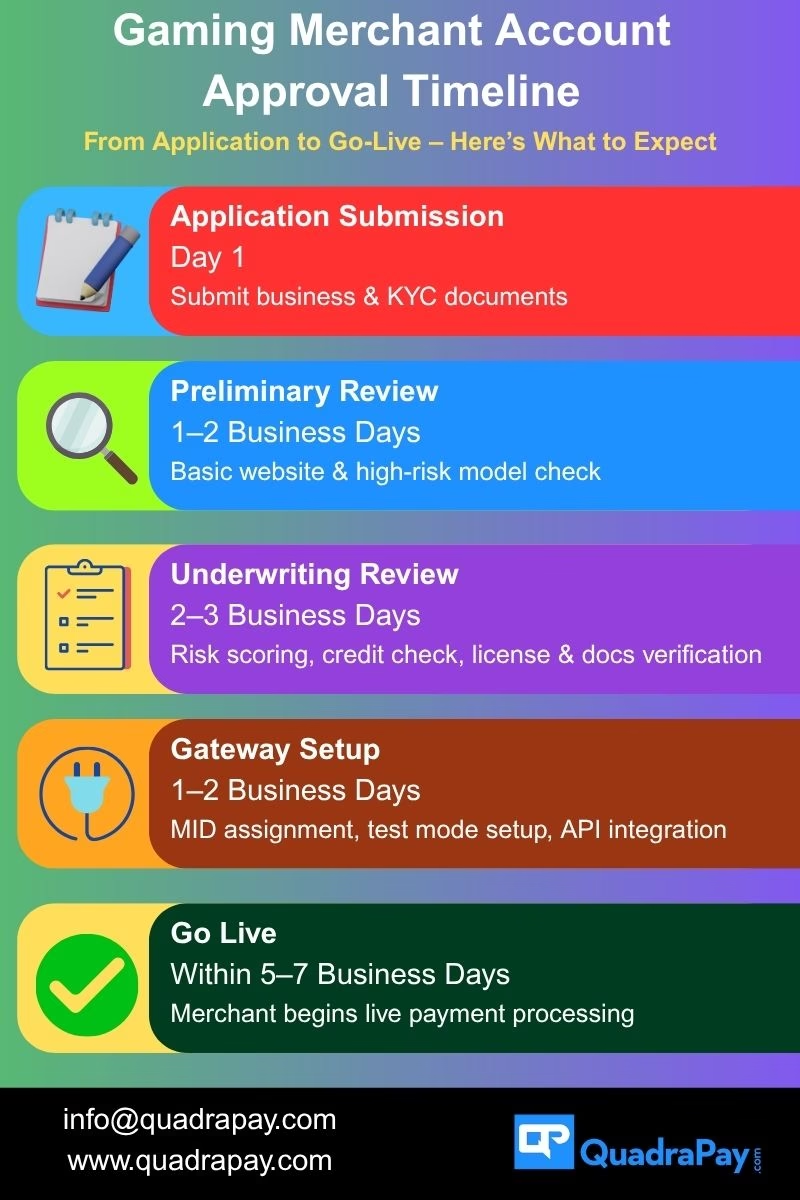
| Stage | Typical Timeframe & Process |
|---|---|
| Application Submission | Day 1 – Submit business registration documents, KYC information and merchant account application. |
| Preliminary Review | 1–2 Business Days – Website compliance review, risk assessment and business verification. |
| Underwriting Review | 2–3 Business Days – Document validation, risk scoring, financial review and licence verification. |
| Gateway Configuration | 1–2 Business Days – MID setup, payment gateway integration, API configuration and transaction testing. |
| Total Approval Time | Typically 5–7 Business Days from application submission to live payment processing. |
Gaming Merchant Account Fees, Processing Rates, and Costs
Gaming merchants face higher processing fees due to the high-risk classification of the industry. The chargeback fees and rolling reserves are common for fraud-prone businesses like gaming, CBD, vapes, and adult toys. Large businesses that process over $100K+/mo can negotiate lower rates.
| Fee Type | Typical Cost & Details |
|---|---|
| Credit & Debit Card Processing | Typically 3.5%–7.5% + $0.10–$0.50 per transaction. Rates vary based on risk profile, processing history and monthly volume. |
| eWallet Payments | Usually 3.0%–6.5% + $0.15–$0.50 per transaction. Common for gaming websites and mobile gaming apps. |
| Cryptocurrency Payments | Generally 1.0%–3.0% with no fixed transaction fee. Settlement options vary by provider. |
| Bank Transfers & ACH Payments | Typically 2.5%–5.0% + $0.30–$1.00 per transaction. Often preferred for larger payment amounts. |
| Mobile Payments | Usually 3.5%–6.0% + transaction fees for Apple Pay, Google Pay and similar digital wallets. |
| Prepaid Cards & Vouchers | Generally 5.0%–10.0% due to higher fraud and chargeback exposure. |
| Account Setup Fee | May range from $0–$500+ depending on underwriting requirements and provider policies. |
| Monthly Account Fee | Typically $10–$50 per month for merchant account maintenance. |
| PCI Compliance Fee | Usually $10–$30 per month to maintain PCI DSS compliance. |
| Payment Gateway Fee | Generally $10–$30 per month for gateway access and transaction management. |
| Chargeback Protection Services | Usually $10–$100 per month depending on fraud prevention tools and monitoring services. |
| Chargeback Fee | Typically $20–$100 for each disputed transaction. |
| Chargeback Prevention Programs | Often $50–$200 per month for alert systems and dispute management tools. |
| Rolling Reserve | Usually 5%–10% of processed volume held for 3–6 months as risk protection. |
| Bank Withdrawal Fee | Typically $10–$50 per payout or settlement transfer. |
| Cryptocurrency Payouts | Generally 0.5%–2.0% plus applicable blockchain network fees. |
| Instant Payouts | Usually 1.0%–3.5% of payout amount for accelerated settlement services. |
| International Transaction Fees | Typically 1.0%–3.5% for cross-border gaming payments. |
| Currency Conversion Fees | Generally 1.5%–4.0% depending on exchange-rate markup. |
| Contract Terms | Most providers offer month-to-month agreements or contracts ranging from 1–3 years. |
| Early Termination Fee | May range from $250–$500+ if a long-term contract is cancelled early. |
There are three types of pricing models that banks offer to merchants. The first one is interchange pricing. In this model, the merchant pays a transaction fee, as determined by the card scheme. This fee varies based on the card type. The merchant also pays markup fees.
The next one is flat pricing.
In this model, the processor offers a fixed percentage on all transactions irrespective of the card type used. The last model is tiered pricing. In this model, the pricing varies based on the transaction volume. For low-volume merchants, the fixed rate may be slightly high. However, as transaction volumes increase, card processing rates decrease under the tiered pricing model.
Gaming Merchant Account Requirements and KYC Documents
| Required Document | Purpose and Requirements |
|---|---|
| Business Registration Certificate | Required to verify legal business registration and ownership. Documents must be valid and verifiable within the company’s jurisdiction. |
| Government-Issued Identification | Passport, national ID card or driver’s licence for company directors and beneficial owners. |
| Proof of Domain Ownership | Domain registrar record, WHOIS information or ownership verification showing control of the gaming website. |
| Website Compliance Documents | Terms and Conditions, Privacy Policy, Refund Policy, AML disclosures, KYC policies and responsible gaming notices where applicable. |
| Gaming Licence (If Applicable) | Required for regulated gaming activities. Licensing requirements vary by jurisdiction and business model. |
| Processing History (Recommended) | Previous merchant processing statements can improve approval rates, transaction limits and underwriting confidence. |
| Business Bank Account Verification | Bank letter, account confirmation document or voided cheque used for settlement account verification. |
| Financial Statements | Recent bank statements and financial records used to evaluate business stability and processing capacity. |
| Corporate Formation Documents | Articles of Incorporation, shareholder information and company registration records may be requested during underwriting. |
| Business Plan (For Startups) | New gaming businesses without processing history may be asked to provide revenue projections and operating plans. |
Conclusion
Choosing the right gaming merchant account is more than simply accepting card payments. Gaming businesses need a payment solution that can support high-risk underwriting, reduce chargebacks, handle multi-currency transactions, support recurring billing, and meet licensing and compliance requirements across different jurisdictions.
A well-structured gaming payment setup can improve approval odds, protect revenue, support international growth, and create a smoother experience for both merchants and players. Businesses that prepare the right documents, maintain a compliant website, and work with an experienced high-risk payment partner are in a much stronger position to achieve long-term processing stability.
Whether your business operates in fantasy sports, esports, skill gaming, mobile gaming, or interactive entertainment, the right merchant account provider can make a measurable difference in conversion, fraud control, and operational reliability. QuadraPay’s goal should be to present this page not just as an informational guide, but as a clear solution page for licensed and compliance-focused gaming merchants looking for stable payment processing.
Gaming Merchant Account FAQ
Does QuadraPay Offer Video Game Merchant Accounts?
With technological innovation, the gaming industry is now all over the internet. There are various options like video gaming, console gaming, cloud gaming, social gaming, fantasy sports, raffles, mobile gaming, and VR gaming. If you are a merchant looking to capitalize on the opportunities in the video gaming industry, then yes, we can offer a merchant account.
What are a few relevant gaming MCC codes?
- 7994 Video Game Arcades/Establishments
- 7993 – Video Amusement and Game Supplies
- 7999—Recreation Services (Not Elsewhere Classified)
Why Is Age Verification for Online Gaming Important?
Some games may involve the risk of overspending, and some may be of a graphic or adult nature. These sites must have an age verification message to ensure access is only for players above a certain age. In general, if the game involves an element of chance, then in most cases, merchants are required to implement age verification.
Do You Provide Merchant Accounts for Licensed Gaming Businesses?
Yes, we do. At QuadraPay, we only help licensed and fully compliant gaming businesses in obtaining high-risk merchant accounts and payment gateway solutions. We do not operate gaming recharge systems, virtual currency resale services, or consumer gaming wallet platforms.
What Are The Best Gaming Alternative Payment Solutions?
Most gaming sites primarily prefer to accept credit and debit card payments; however, other methods are also in vogue. These include prepaid cards, bank wire, ACH, crypto payments, and SEPA payments.
Which countries do you serve?
We serve licensed merchants based in the United States, Canada, the United Kingdom, the European Union/EEA, Switzerland, Australia, New Zealand, Israel, and Singapore.
How long does merchant account approval take?
Approval typically takes 5 to 7 business days after submission of documents.
Can I accept payments in multiple currencies?
Yes, our solutions support multi-currency processing (USD, GBP, EUR, AUD, etc.), depending on the region and acquirer.
What documents are required for onboarding?
You’ll need a business license, KYC documents, financials, a website with terms & policies, a gaming license (if applicable), and compliance declarations.
Future of Gaming Payment Processing
We believe that in the coming years, there will be a significant rise in the use of crypto and NFT transactions in the gaming community. Fraud detection will become more powerful by utilizing artificial intelligence and machine learning. Mobile gaming will continue to take over.
People will spend more time on their mobile devices while playing games in comparison to doing the same on a laptop or desktop. We are also predicting that significant regulatory reforms will be implemented to ensure that deep fake issues are kept in check. We anticipate a significant rise in the global gaming industry, and payment service providers will innovate to meet the demands of such a large industry.
Future of Gaming Payment Processing Trends
We believe that in the coming years, there will be a significant rise in the use of crypto and NFT transactions in the gaming community. Fraud detection will become more powerful by utilizing artificial intelligence and machine learning. Mobile gaming will continue to take over.
People will spend more time on their mobile devices while playing games in comparison to doing the same on a laptop or desktop. We are also predicting that significant regulatory reforms will be implemented to ensure that deep fake issues are kept in check. We anticipate a significant rise in the global gaming industry, and payment service providers will innovate to meet the demands of such a large industry.
Apply for a Gaming Merchant Account Today
Thank you for reading this guide in its total form. We are confident that now you are prepared to start your journey to find the right payment service provider for your gaming business. If you need any assistance, do not hesitate to contact us. You can reach the specialist for gaming merchant accounts at QuadraPay by sending an email to info@quadrapay.com