
Once your spiritual business merchant account is approved, don’t think that the payment service providers will relax. In reality, they actually tighten monitoring, and this is done because now the real money is flowing. Getting your account approved was just getting the gatepass; how long your account will survive totally depends on how good you are at following the terms and conditions of your high-risk merchant account provider.
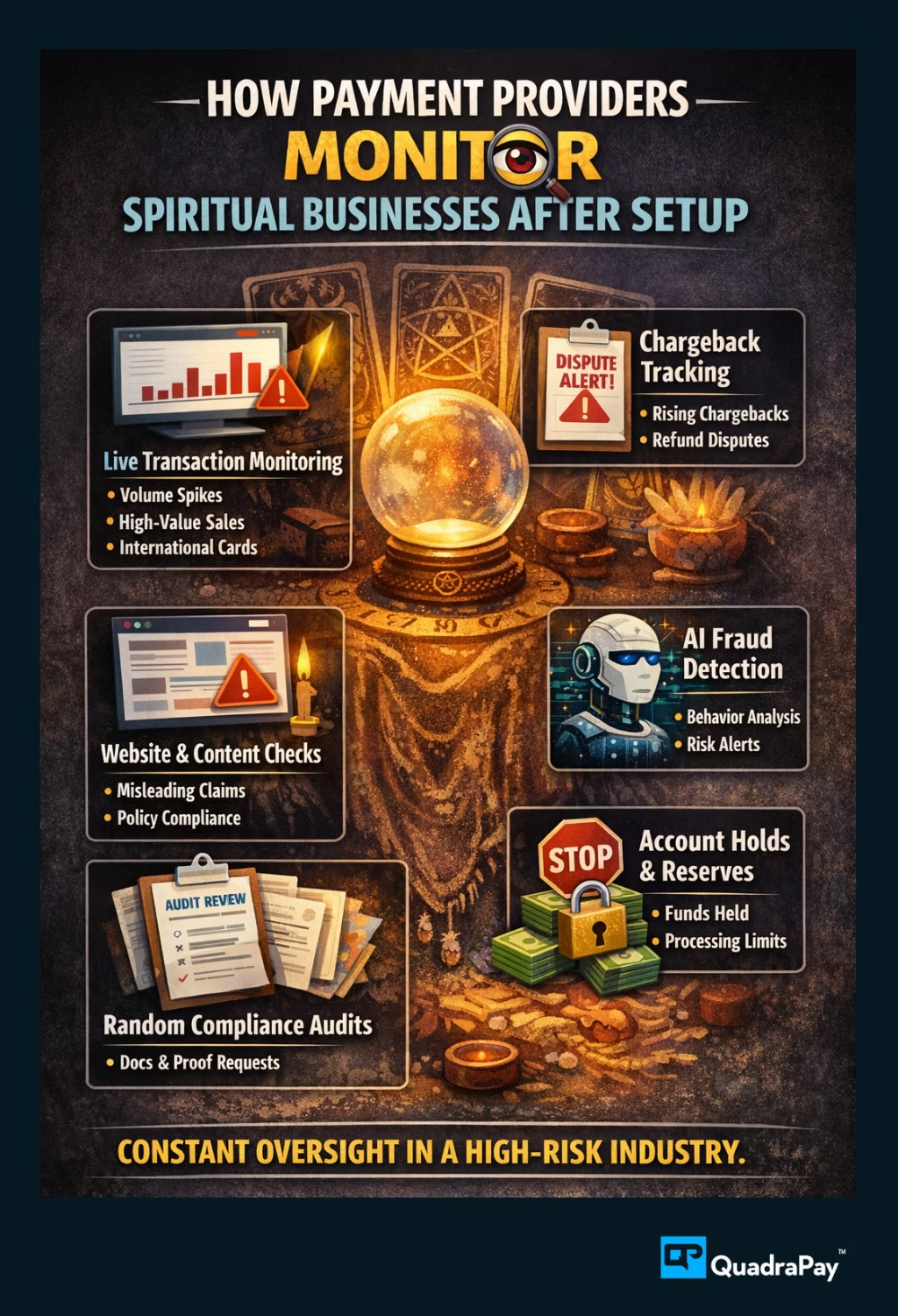
Payment processing companies continuously track all your transactions in real time, and this is done to understand your behavior as a merchant. This includes various elements such as analyzing volume consistency, average transaction size, location of clients, and frequency of transactions as well as card velocity.
If on your MID your activity suddenly shifts… Let’s understand this from an example: a sudden spike in sales, or a jump in high-ticket readings, or an increase in international cards, all of this can very easily trigger automated risk alerts.
Your goal should be to ensure your live transaction behavior matches exactly what you agreed to at the time of account underwriting.
A major part of ongoing monitoring is also focused on chargebacks and disputes, and you must know it because it is very critical in the spiritual industry. Payment service providers carefully track your chargeback ratio, dispute reasons, and how quickly you are able to resolve issues.
Since services like tarot readings, numerology, psychic readings, and astrology are subjective, the customers may very easily raise disputes simply based on dissatisfaction rather than fraud. If your chargeback levels rise or even show risky patterns, then your PSP may impose rolling reserves, hold funds, or even suspend processing and, in the worst case, send you an account termination email.
Strong customer care, setting very clear expectations, and extremely proactive refund policies are super essential to stay in good standing.
Payment service providers also continue to review your website and business model even after approval is done. They regularly scan your website, landing pages, social media, and marketing campaigns, and this is done simply to ensure nothing has changed in a way that increases risk.
For example, if you add terms like “guaranteed results” or you claim that your reading will help users make money or your site has unclear refund policies, all of this can very easily trigger compliance reviews. Even small change in messaging can have a very big impact on how your business is classified by risk team.
Behind the scenes, payment processors also use AI-driven risk and fraud systems. These smart tools are constantly evaluating both you and your customers. These systems check for behavioral signals such as transaction velocity, repeat usage patterns, device consistency, and geographic mismatches.
If your account starts to appear like previously flagged, fraudulent, or terminated profiles, then the automated systems can immediately apply restrictions most of the time, this is done without manual review. Here you must know that consistency, transparency, and clean processing history are your biggest assets in building long-term trust with payment processing partners.
Remember that payment service providers conduct ongoing compliance reviews and audits throughout the lifecycle of your account. They may anytime request updated documents, proof of service delivery, customer interaction records, or business verification details, and this can be done at any time. These reviews are sometimes scheduled or sometimes triggered by specific risk signals or even sometimes manually initiated by risk team members.
The reality is simple, and it is that the account approval is just the beginning for you, and you will win in this space if you operate every day as if you are being reviewed.
If you have any questions regarding spiritual and spiritual merchant accounts, then feel free to contact QuadraPay.