
The business may not automatically require high-risk payment processing if the products are legal and are accurately described, and the purchase is supported by clear customer consent. However, any kind of surprise deliveries, risky messaging, adult-adjacent products, and possible recipient dispute can certainly cause a payment processor to apply enhanced underwriting, even when your merchandise is not erotic.
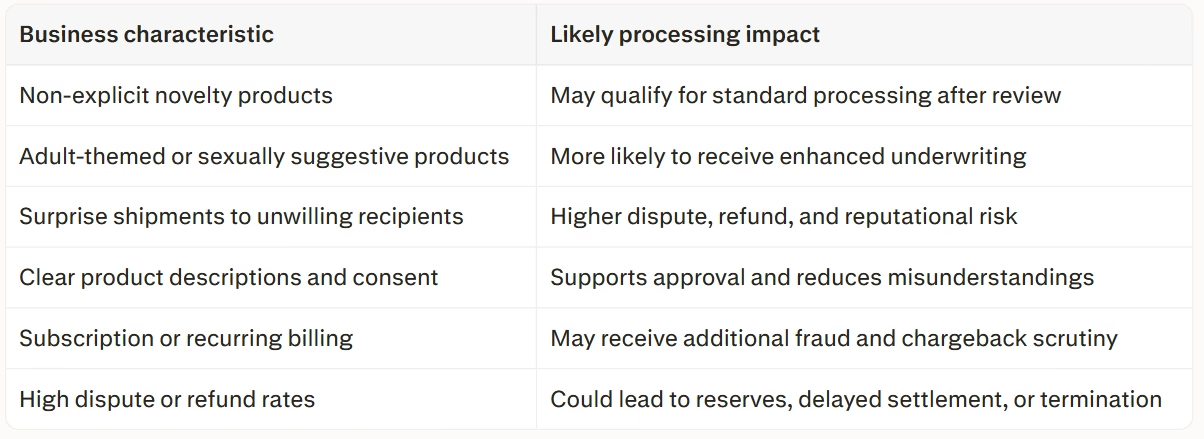
Adult products and services are generally listed among categories that may require high-risk payment processing solutions. A standard merchant account may be possible, but the approval should never be assumed simply because another business uses the same provider.
Many of the low-risk payment service providers, they generally evaluate the business under their own underwriting and monitoring rules and an account can be restricted if the actual product or the marketing or the transaction pattern differs from the original information in the merchant account application.
Merchants should therefore obtain written confirmation from the provider before starting to accept payments. The main concern here is not only the product itself, but the complete business model. Payment processors will review your website, product photographs, advertising language, customer journey, refund policy, shipping processes, age restrictions, wherever it is relevant, and the way the customer authorizes the purchase.
High-risk merchant accounts generally involve higher fees, longer underwriting time frame, and possible rolling reserve. But such accounts are designed to provide a more stable payment processing experience for businesses in difficult industries. The send it to someone who is not expecting it concept deserves a particular caution.
If the recipient does not recognize the sender, did not authorize the purchase, or believes that the product is offensive or misleading, then the purchaser may certainly request a chargeback. A high volume of chargebacks can create serious financial losses and also place your merchant account and payment gateway as well as business bank relationship under tremendous pressure.
That is why before applying, the business owner operating in such industries should prepare for a complete underwriting package. This should include the business registration details, ownership identification, live website, itemized product description, terms and conditions, shipping policy, refund policy, customer service contact information, expected monthly revenue, average order value, and a clear explanation how the surprise element works.
The business should never hide its adult-adjacent positioning or apply under any inaccurate category. Payment processors will come to know what you sell because they are handling similar applications on a daily basis. So there is no point in lying to them.
The best approach would be to contact both standard and high-risk payment processors before launch and disclose the product, marketing model, and ask whether the exact business model is permitted or not. If a standard payment service provider gives a written consent that yes, they can support such business model, then you can definitely keep it as a backup option. However, such complex business models are best suited for high-risk merchant accounts.